
English / Español (Desplácese hacia abajo en la pantalla)
Temuko/Temuco: Its History
Temuko, Hispanicized as Temuco, is a territory bisected by the Cautín (Cagten) River that separates two hills: the Konünwenü and the Ñielol (Ngenlol). The name “Temuko” is composed of two terms in Mapudungun: Temu (Blepharocalyx cruckshanksii, a native tree of the Mapuche territory) and ko (water), and can be translated as “Waters of the Temu.” Temuko, then, refers to a territory formerly surrounded by dense forest and waters alongside the Lof (Mapuche territorial units). From the wetlands to the foothills of Cerro Ñielol, estuaries emerge, crossing this space and joining the malliñ (floodplains), menoko (wetlands), lagoons, and pools to create an ecosystem that has supported life from very early on. Pathways (rüpü) cross through this territory, allowing movement to the coast, the mountains, or until the flatlands of the south or north of Wallmapu.
The Temukoche, inhabitants of this territory, along with their neighbors the Txüf Txüf, Wilchawe, Kollawe, Makewe, and Forowe, formed an alliance known as Wenteche that supported them in defending their independence and in negotiations-through Parliaments- with the Empire (Spanish) and the Republic (Chilean), as well as in developing trade based on their own economic production system. The exchange of their products took them to the other side of Fütxa Mawiza (the Andes mountain range). From these regions of Puelmapu they brought the kulliñ (livestock) that formed the basis of a prosperous economy.
Temuko today is a commune of the same name that includes the main city of the Cautín Province and is the capital of what is now called the Araucanía region. This transformation began at the end of the nineteenth century, when the Chilean army installed a military fort on the lands of the main Lonko (“community head”) who had resisted the invasion. The spaces of the plazas (public squares) adjacent to the Tucapel Regiment form the old town that birthed the city and the new spatiality imposed by the Chilean state. The violence of colonial occupation is omitted from Temuko’s official history. However, the memory of our people puts in tension said omission.
Since then, Temuko has been a thriving city with sustained urban growth. Immersed in a capitalist economy focused on forestry, agriculture, and livestock production, the strength of the city has focused on services, particularly commerce. In this process, the passing of time has nurtured a contradiction, since its original inhabitants, once displaced to lands adjacent to the original city, today have been overwhelmed by the changes and left behind by the neighborhoods, industries, and institutions that continue to spring up around them. Yet Mapuche presence persists. Its history also runs through these streets, redefining a territory in tension.
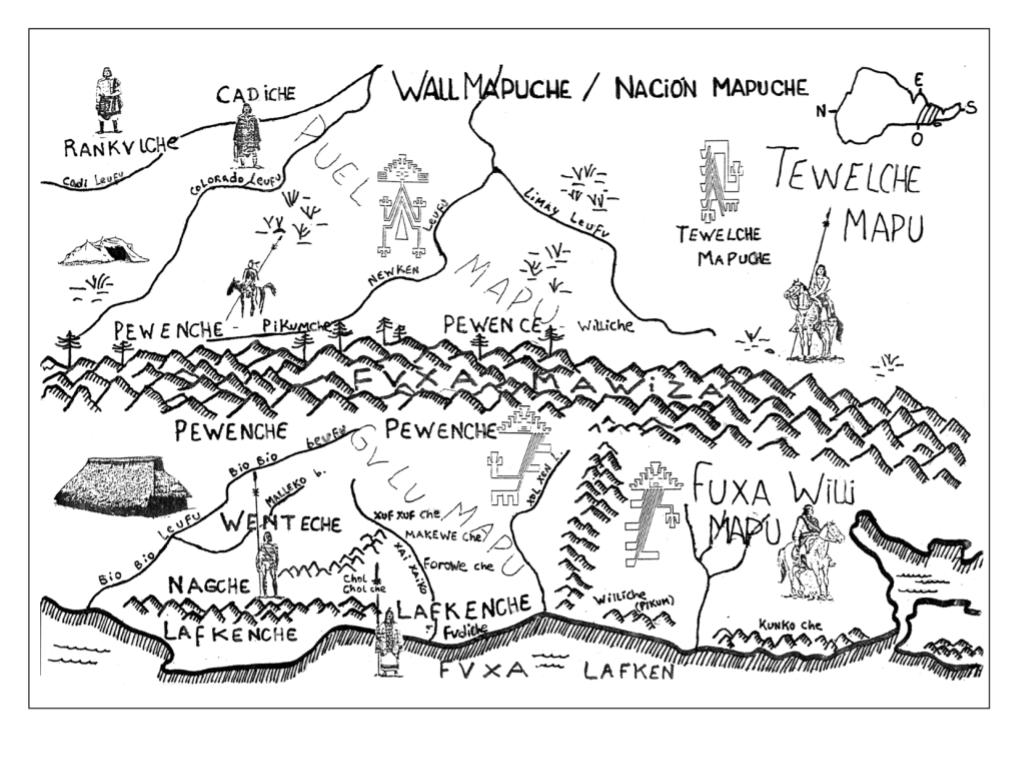
Map: By Pablo Marimán, 2006.
Within the Commune of Temuco, the Mapuche population is estimated at around 70,000 people. According to the State of Chile’s 2024 national census, 344,445 Mapuche people inhabit the Araucanía region, forming part of the 1,623,023 Mapuche that live in Chile (8.8 % of the overall population). The overall Indigenous population in Chile is 2,105,863 people, representing 11.5% of the country’s total population of 18,480,432 people.
NAISA 2026 will take place here, at one of the central points of Wallmapu.
Temuko/Temuco: su historia
Temuko, castellanizado como Temuco, es un territorio del Ngulu Mapu surcado por un río, el Cautín (Cagten), que separa dos cordones montañosos: el Konünwenü y el Ñielol (Ngenlol). Su nombre lo componen dos términos en Mapudungun: Temu (Blepharocalyx cruckshanksii, árbol nativo) y ko (agua), y puede ser traducido como “Aguas del Temu.” Así, Temuko remite a un territorio cuyos Lof (comunidades ancestrales) coexistieron con un denso entorno de bosques y aguas. De los humedales a los pies del Cerro Ñielol, se desprenden esteros que surcan este espacio y unen los malliñ (vega), menoko (humedales), lagunas y pozones, creando un ecosistema que ha permitido su poblamiento milenario. Por él pasaban los caminos (rüpü) que permitían el movimiento hacia la costa, la montaña o hacia los llanos del sur o del norte de Wallmapu.
Los Temukoche, habitantes de este territorio, junto a sus vecinos de Txüf Txüf, Wichawe, Kollawe, Makewe, Foyeko, conformaron una alianza conocida como Wenteche que les favoreció la defensa de su independencia y la negociación -por medio de Parlamentos- con el imperio (español) y la república (chilena), así como en el desarrollo del comercio a partir de su propio sistema productivo. Los intercambios de sus productos los llevaron al otro lado del Fütxa Mawiza (los Andes). De estos espacios del Puelmapu traían el kulliñ (ganado) que estaba en la base de una economía próspera.
Temuko es hoy una comuna del mismo nombre que contiene a la ciudad principal de la provincia de Cautín y es la capital de la denominada Región de la Araucanía. Esta transformación comienza a finales del siglo XIX, cuando el ejército chileno levantó un fuerte militar sobre las posesiones del lonko (jefe) principal que había resistido la invasión. Los espacios de la Plazas públicas aledañas al regimiento Tucapel conforman el casco antiguo donde nació y comenzó a expandirse la ciudad y la nueva espacialidad que impuso el Estado. La violencia de la ocupación colonial se omite en la historia oficial. Sin embargo, en la memoria de sus gentes se tensiona dicha omisión.
Desde entonces, Temuko ha sido una ciudad de crecimiento urbano sostenido. Inserta en una economía capitalista de corte silvo-agro-pecuaria, el fuerte de la ciudad se ha centrado en servicios como el comercio. En este proceso, el paso del tiempo ha incubado una contradicción, pues sus habitantes originales, otrora desplazados a tierras aledañas de la inicial urbanización, hoy se han visto sobrepasados por los cambios quedando sus comunidades abajo de barrios, industrias e instituciones que se siguen levantando sobre ellos. Aun así, persiste la presencia mapuche. Su historia transita también sus calles, resignificando un territorio en tensión.
Dentro de la Comuna de Temuco, la proyección de población mapuche es de alrededor de 70 mil personas. Según el censo del Estado chileno de 2024, en la región de la Araucanía habitan 344.445 Mapuche, quienes son parte de 1.623.023 Mapuche que viven en todo Chile (8,8 % en relación a la población del país). La totalidad de población indígena de Chile es de 2.105.863 personas, representando el 11,5% de la población en Chile, la cual es de 18.480.432 personas.
Aquí llegará NAISA 2026, a uno de los puntos centrales de Wallmapu.